Software & toolsCustom 3D Services
How to Sell Personalized 3D Printed Gifts

A physical portrait print from the ThreeDee Bust Maker showcase.
A portrait of someone's dad, a couple's keepsake or a figurine connected to a favourite hobby can become a personalized 3D printed gift. To sell one, you need a finished sample, a clear ordering process and a price that covers the work from the first photo to the packed parcel.
ThreeDee Nova generates a 3D model from an image. With a paid Nova plan, you can sell physical prints generated from your own photos or customer photos you have permission to use. You can print the model yourself or order printing and finishing through ThreeDee.
For Christmas orders, prepare your sample and production schedule before opening the listing. The steps below take you through a first offer, including a pricing worksheet and an example product description.
1. Choose one gift you can deliver consistently
Pick a specific product before offering every size, style and finish. Three starting points are:
- A single-person portrait bust: a desk ornament based on a customer's photograph.
- A couple's portrait: a keepsake for partners, parents or grandparents. Test a sample with both people before accepting orders.
- A hobby figurine: a person shown with an object or activity that matters to them. Check whether the pose and smaller parts can be printed reliably.
Define what the buyer receives: the number of people, overall height, material, finish and whether a base is included. Decide how many model revisions your price covers. A simple first offer could be one portrait style, one size and a choice between an unpainted and a painted finish.
Treat unfamiliar designs as samples to develop. A successful bust does not prove that a thin fishing rod, delicate glasses or a complicated pose will survive printing and delivery.
2. Make a sample and record the work
Choose a photograph you have permission to use and open Nova Bust Maker. After generation, rotate the model and compare the face, hair, profile and shoulders with the reference. Inspect the base and thin details at the intended print size.
Some models can be printed without corrections; others need adjustments. Resolve problems with the shape before spending time on painting or packaging. If you need help, discuss artist adjustments with ThreeDee before production.
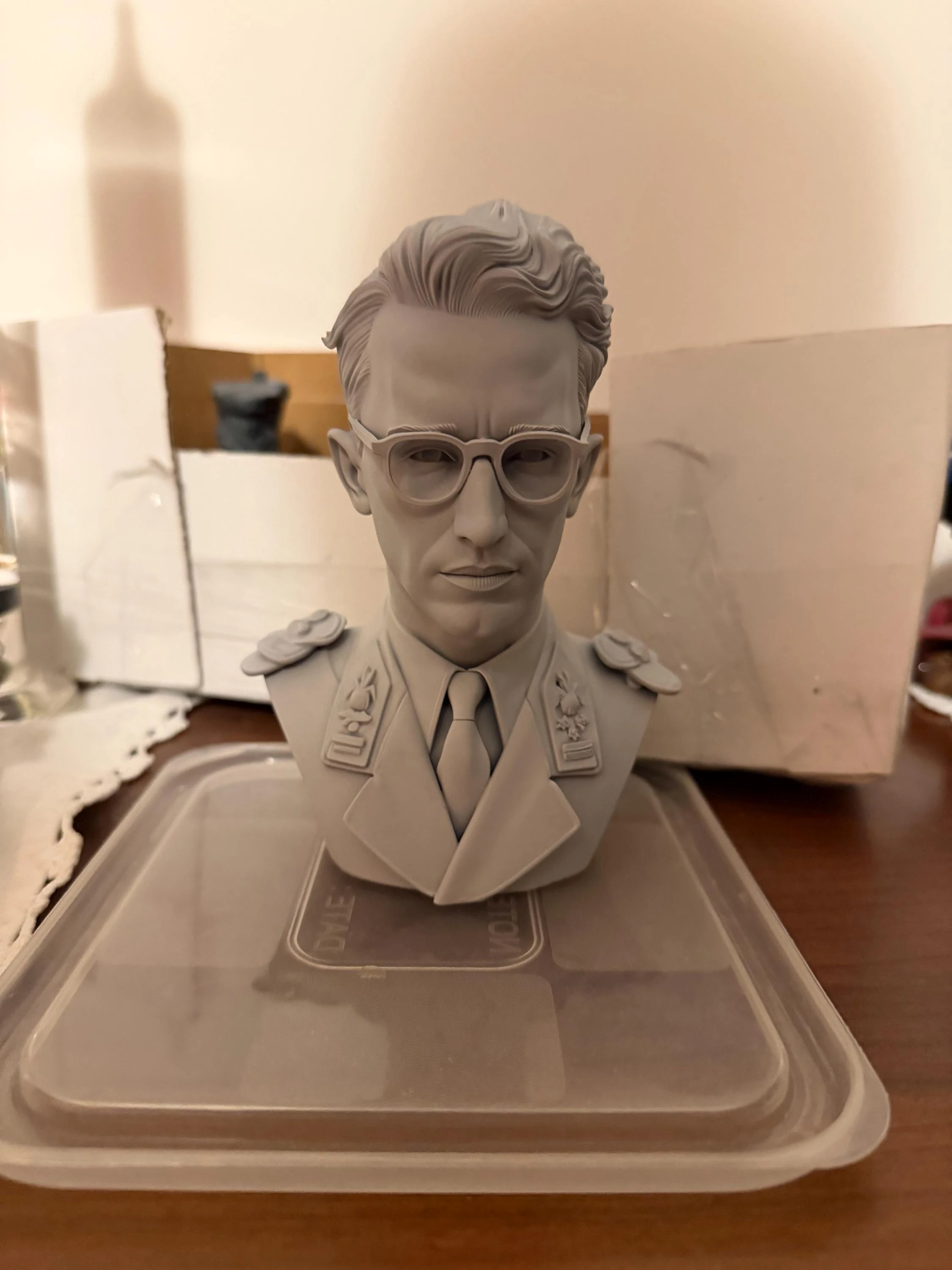
An existing ThreeDee portrait print. Fine features such as glasses and clothing details deserve a close inspection on your own sample.
Record the generation attempts, editing time, production cost, finishing time and packing materials. If the first print fails, record that too. These numbers are more useful for pricing than the cost of the raw material alone.
Check the physical sample from every side, including underneath the base. Pack it as you would a real order and check that fragile parts are supported. Photograph the finished item in clear light, including a close-up and a view that explains its size.
3. Print it yourself or use ThreeDee's studio
With your own printer, export a suitable file, check it in your slicer and prepare the size, orientation and supports. Your slicer converts the model into instructions for your printer. Follow your printer and material instructions for printing, cleaning and any required curing.
You can also order a physical print from your model in Nova. ThreeDee offers detailed resin printing and finishing, including unpainted pieces, gold, bronze or silver surface finishes, and custom hand painting. Ask the studio about priming or another custom finish before ordering. Metallic finishes describe the surface appearance of a resin print.
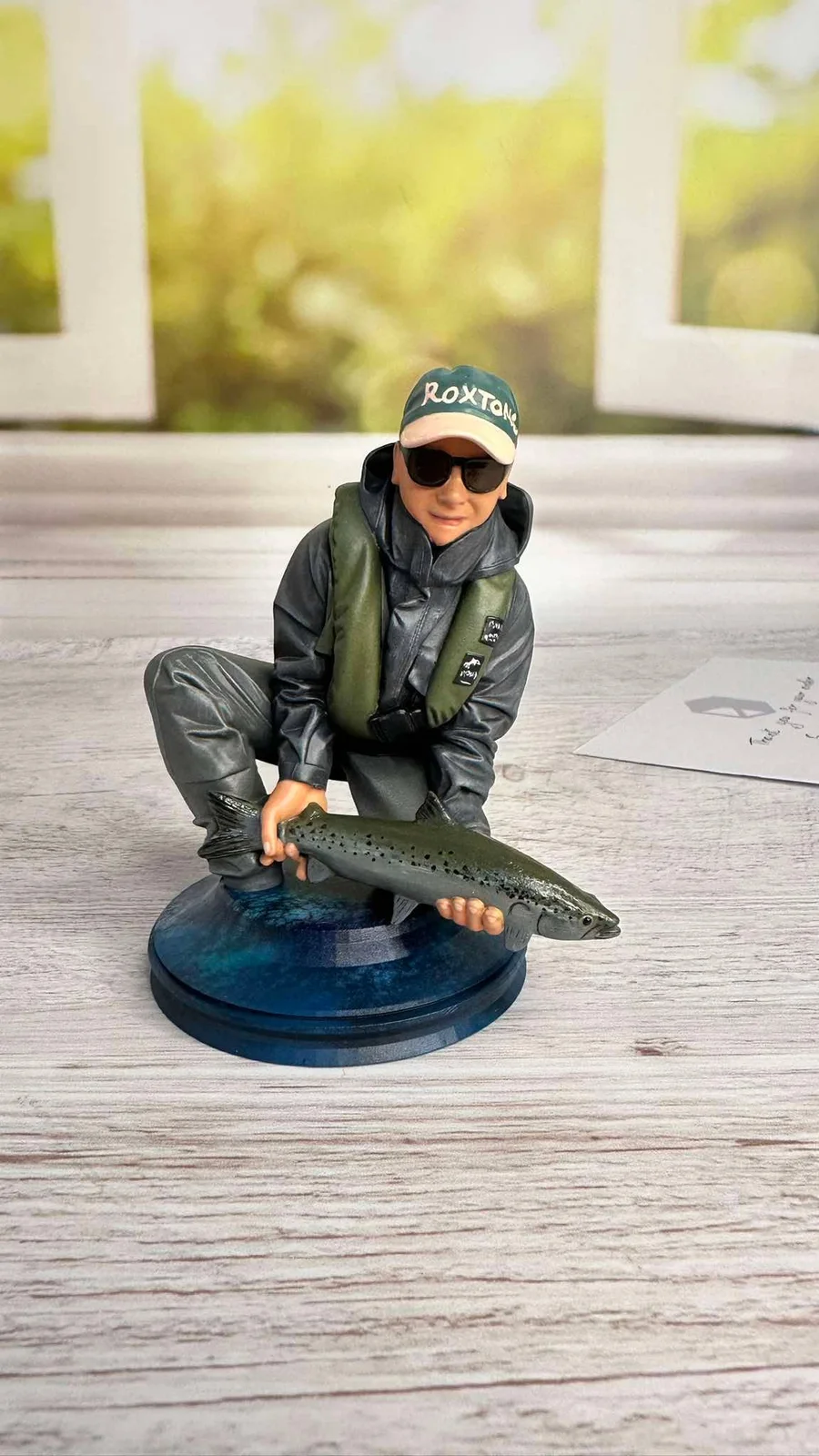
A finished ThreeDee angler figurine. Hand painting adds distinct colours to the clothing, skin, fish and base.
If ThreeDee will produce your orders, confirm the sample, size, finish, current quote, production time and delivery destination first. Check whether you will receive and inspect the piece before sending it to your customer. Build that extra delivery and handling into your price and schedule.
You remain the buyer's point of contact for the order. Keep the approved model, finish instructions and production details together so the finished piece matches what you offered.
4. Price the complete order
Count the work you do even when another studio prints the object. Your price needs to cover:
- Generation credits and any model adjustments.
- Printing and finishing, or the studio's production quote.
- Your time for messages, model review, packing and order handling.
- Packaging and all delivery legs you pay for.
- A share of overheads and an allowance for remakes.
- Marketplace, payment and other selling fees.
Then decide how much profit you want above those costs. Include your own labour as a cost before adding profit.
A worked pricing example
These are illustrative amounts for one order, not ThreeDee quotes or Etsy fee rates:
- Generation and model preparation: €3.
- Printing and finishing: €24.
- Your labour: €18.
- Packaging: €5.
- Delivery: €8.
- Overheads and remake allowance: €7.
That gives €65 in costs. Suppose you want €15 profit and, for this calculation only, expect percentage fees of 10% on the total you collect. With no additional fixed fee, the calculation is:
Price = (€65 + €15) ÷ (1 − 0.10) = €88.89.
At a €90 total, €9 goes to those assumed fees and €65 covers the entered costs, leaving €16 before applicable taxes. The €8 delivery cost is already included in this example.
Use your actual fees and their charging basis. Check taxes separately, and include advertising or currency-conversion costs if they apply. This calculation gives you a price to evaluate against your sample and customer demand.
Open the personalized 3D gift pricing worksheet to enter your own costs, fixed fees, percentage fees and target profit. You can print or save the completed worksheet as a PDF from your browser.
5. Build a listing around your actual sample
Show the finished object first. Add a side or rear view, a close-up of the finish, and a size comparison. Only show a customer's reference photo publicly with their permission. Make clear which images show a physical print and which show a digital model awaiting approval.
Your description should answer five questions: what will I receive, what photo should I send, what can I choose, how does approval work, and when will it ship?
Example product description
The following is an example for a seller offering a 10 cm single-person resin bust. Use it only where the details match the product and service you actually provide:
Personalized portrait bust from your photo
A custom 10 cm resin portrait bust, made from a photograph you supply. Choose an unpainted finish or request a quote for hand painting.
Send a clear photo showing the face and hairstyle, and tell us the date you need the gift. We review the reference, create the digital portrait with ThreeDee Nova and send you a model preview before printing. One round of model revisions is included.
You receive one physical bust. A digital model file is not included. We confirm the production and delivery estimate for your location before you order.
Add your actual processing time, dispatch location, delivery options and order policies to the listing. If another studio makes the item, identify the production partner where your platform requires it. The example above does not establish a universal turnaround time or a ThreeDee revision package.
6. Choose your sales channel and prepare the order process
For Etsy, review the current Creativity Standards. They address original designs made with tools such as 3D printers, seller-prompted AI creations, AI disclosure and production partners. Personalized listings need a finished customized item in the first image. Permission to sell a Nova print does not by itself establish that a particular listing meets Etsy's rules.
At a local market, bring your finished sample, a small display of the available finishes and a simple order form. A QR code can take people to your product page. Let them know whether they are buying a ready-made piece or placing an order for a portrait to be produced later.
For each custom order, agree on:
- The reference photo, permission to use it and the intended recipient or occasion.
- The size, finish, base and any personalization.
- The price, included revisions and what changes cost extra.
- How the customer will approve the model before printing.
- The required date, dispatch estimate and delivery destination.
Keep the photo and approval attached to the correct order. Ask separately before using a customer's likeness in your portfolio. The paid-plan permission here covers physical prints from your own or authorized customer photos; check rights separately for downloaded models, other people's designs or digital-file sales.
7. Plan Christmas orders backwards from delivery
Choose a date by which the buyer needs the gift, then work backwards through shipping, packing, finishing, printing, model preparation and customer approval. Include time for your production partner to deliver to you if you are shipping the final parcel yourself.
Build in a buffer for a delayed approval, a remake or a missed collection. Use the current delivery guidance for the actual carrier, service and destination. International orders and local collection need different cutoffs. There is no single Christmas deadline that suits every order.
Before accepting payment, confirm that the order fits your remaining production capacity. If you can reliably finish and check four painted pieces in a week, avoid selling ten for that same week. An unpainted option may need a different schedule from a hand-painted one.
On Etsy, processing time covers preparation before you hand an order to the carrier; it is separate from transit time. Etsy calculates processing from the day after purchase, so include time for photo review and approval in your stated window. Follow Etsy's process if the agreed timing changes. Etsy's processing-time guidance.
Once you reach your cutoff, update the listing before taking more Christmas orders. You can offer later delivery or local collection where feasible, with the timing made clear before purchase.
Prepare your first offer
Make one sample, finish the pricing worksheet and write the listing around the actual piece. Confirm the production route and delivery estimate, then open a manageable number of custom-order slots.
Create a portrait in ThreeDee Nova, or explore Bust Maker and the printing service to plan your sample.